Island news
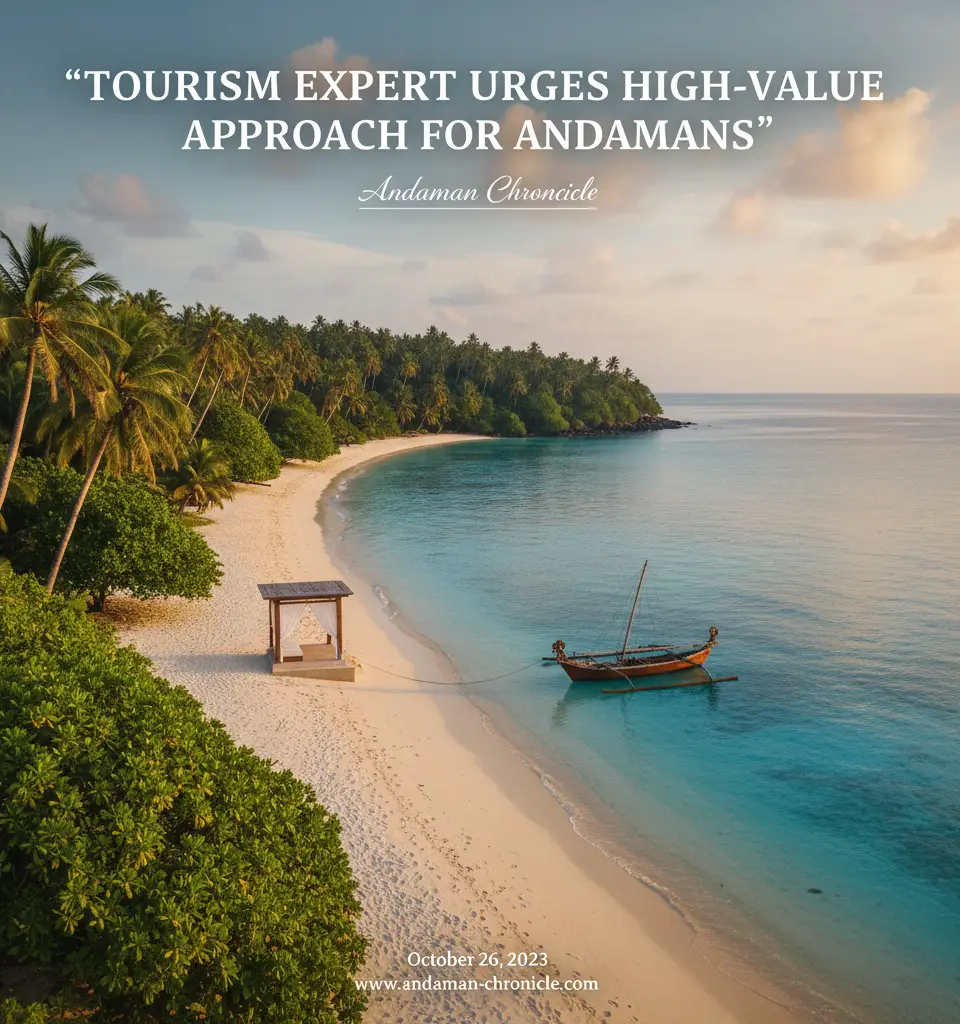
Tourism Expert Urges High-Value Approach for Andamans
Nitin Thakur, a prominent figure in the tourism industry, is pushing for the Andaman and Nicobar Islands to embrace a high-value, sustainable tourism model. He believes this strategy will ensure long-term economic success while safeguarding the islands' delicate environment.
newToken: Here's the revised `bodyMarkdown` addressing your instructions:
``` Nitin Thakur, a distinguished leader in the tourism industry and a key figure with Prism Group, firmly believes that the Andaman and Nicobar Islands should strategically pivot towards attracting high-value tourists rather than solely focusing on maximizing visitor numbers. He articulated this perspective with conviction at the Andaman Ideas Summit 2026, positing that this discerning approach is not only vital for the islands' enduring economic prosperity but also crucial for safeguarding their delicate and irreplaceable natural environment.
Thakur eloquently emphasized the inherent and unique qualities that distinguish the Andamans from conventional tourist destinations. Rather than engaging in a numbers game with other locations, he advocated for a paradigm shift, urging local decision-makers, entrepreneurs, and businesses to collectively strive towards alluring travelers who are inclined to spend more. This demographic, he argued, inherently places less strain on the islands' nascent infrastructure and pristine natural resources, thereby fostering a more sustainable and mutually beneficial tourism ecosystem.
Overcoming Perceptional and Logistical Challenges
One persistent challenge confronting Andaman tourism, as identified by Thakur, stems from the common perception among many mainland Indian travelers regarding international destinations like Bali. These overseas locations are often perceived as more accessible and convenient to reach than the Andamans. Thakur views this prevalent perception not as an insurmountable hurdle, but as a valuable learning opportunity. He posited that by meticulously enhancing the overall visitor experience—encompassing everything from seamless travel logistics to exemplary hospitality—and ingeniously marketing the islands' unparalleled offerings, the Andamans can effectively surmount these challenges and successfully attract a more premium segment of travelers.
He further elaborated on the need for improved connectivity and infrastructure development that caters specifically to discerning travelers. This includes considering more efficient air and sea links, as well as developing a broader range of high-end accommodation options that align with the expectations of high-value tourism. Thakur stressed that merely having beautiful scenery is not enough; the entire journey and stay must be orchestrated to deliver an exceptional experience that justifies the premium positioning.
The Ascendance of Local Entrepreneurship and Diversification
Thakur also underscored the burgeoning significance of local businesses and initiatives in sculpting the future trajectory of tourism in the Andamans. He observed a remarkable surge in the proliferation of homestays, quaint boutique resorts, and innovative staycation options across the islands, a trend that has gained considerable momentum, particularly in the post-COVID-19 pandemic era. Many resourceful locals are proactively transforming small parcels of land into viable tourism ventures, thereby generating novel economic opportunities and empowering their respective communities. Thakur envisions this organic, grassroots-driven trend evolving into a substantial and indispensable contributor to the islands' overall tourism economy in the forthcoming years.
This rise of local entrepreneurship, he noted, naturally encourages a more authentic and immersive visitor experience, moving beyond conventional resort-centric tourism. It allows travelers to engage directly with the local culture, cuisine, and way of life, adding another layer of value to their Andaman journey. He encouraged further government and private sector support for these local initiatives, perhaps through training programs, financial incentives, and streamlined regulatory processes.
Learning from Global Models and Future Potential
Drawing insights from his expansive experience in the global hospitality sector—his company proudly operates in over 35 countries and meticulously manages thousands of properties worldwide, including a significant portfolio in diverse coastal and island destinations—Thakur perceptively identifies a substantial, yet largely untapped, potential for further developing vacation homes and curated homestays within the Andaman and Nicobar Islands. He shared compelling insights gleaned from successful global models he has witnessed, particularly emphasizing how such developments can attract long-term visitors and digital nomads, thereby diversifying the tourism offering and ensuring more consistent revenue streams.
He believes that with proper planning, sustainable development, and a focus on unique, high-quality offerings, the Andamans can indeed become a leading high-value tourism destination, balancing economic growth with environmental preservation. This long-term vision requires a concerted effort from all stakeholders, from government bodies to local communities and private investors, to cultivate an environment that fosters sustainable growth and enhances the overall allure of these magnificent islands.
Source
```
Local planning essentials
Plan the next part of your Andaman trip
Use these local guides to connect the islands, ferries, seasons and costs into one workable route.
- Groups and teamsAndaman corporate offsite planningReview flights, rooming, meeting space, ferries and cost bands for a structured team proposal.Read the local guide
- Scuba planningScuba diving costs and best sitesCompare beginner dives, certified dives and course prices across Havelock, Neil and Port Blair.Read the local guide
- Ferry logisticsPort Blair to Havelock ferry guideUnderstand sailing choices, reporting time, luggage rules and the buffer needed around flights.Read the local guide
- Season guideBest time to visit AndamanChoose travel months using sea conditions, ferry reliability, prices and scuba visibility.Read the local guide
- tourism
- andaman
- sustainability
- economy
- hospitality