Guide
Thinking About Scuba Diving in Andaman? A Beginner's Guide
Never tried scuba diving before? Andaman is one of the best places in India to start. We'll walk you through everything a first-timer needs to know, from the costs and best dive sites to getting certified.
''' "So, are you going to try scuba diving?"
We hear this question all the time from folks planning their first trip here. For so many, visiting the Andaman Islands and exploring the underwater world is a single, inseparable dream. And honestly? We get it. If you're going to try breathing underwater for the first time, you couldn't have picked a better place. Our calm, clear-blue waters are practically legendary, and the sheer amount of fish and coral life you'll see, even on a beginner dive, is just incredible.
Forget what you've seen in movies. You don't need to be a super-fit athlete or some kind of daredevil. Here on Havelock (Swaraj Dweep) and Neil Island (Shaheed Dweep), diving is something for everyone. Let’s walk through what your first time will actually be like.
Your First Dive: What to Expect
So you’ve decided to do it. Awesome! You won't be starting with a full certification course. Instead, you'll be doing what the dive community calls a "Discover Scuba Dive" (DSD) or a "Try Dive." It’s designed specifically for complete beginners.
First, you'll meet your instructor at a certified dive center. These folks are professionals, and your safety is their number one job. They'll start with a briefing on land, explaining the basic science of diving, how the equipment works, and a few simple hand signals to communicate underwater. Pay attention, but don't stress—it's all very straightforward.
Next, you'll get kitted out with your gear: a mask, fins, a wetsuit, and the scuba unit itself (the tank and breathing regulator). The instructor will take you into calm, shallow water where you can stand up. This is where you'll take your first breaths underwater. It feels a bit strange at first, but you get used to it fast! You'll practice a couple of easy skills, like clearing water from your mask.
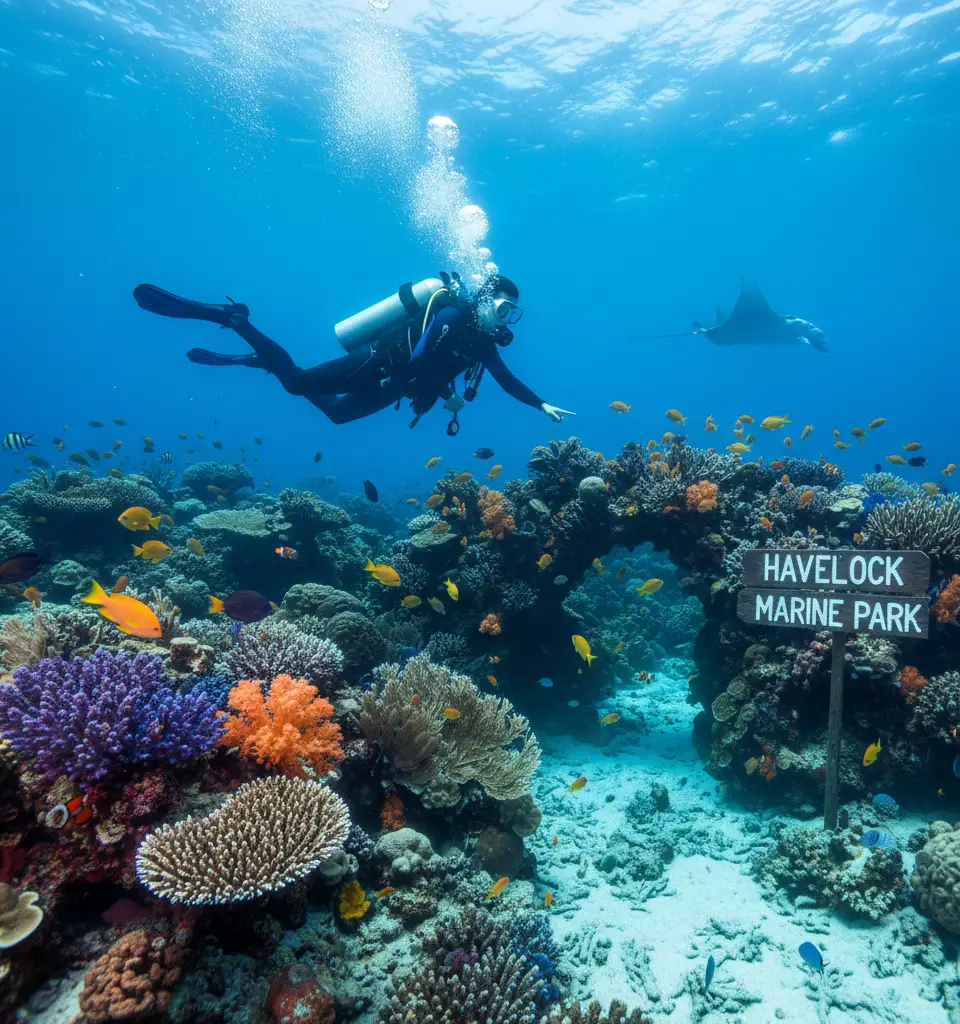
Once you’re comfortable, the real adventure begins. Your instructor will be with you the entire time, often holding onto your tank, as you descend slowly into the blue. Most beginner dives go down to a maximum depth of about 8 to 12 meters. You'll spend around 30-45 minutes exploring a coral reef, watching schools of parrotfish, clownfish (yes, Nemo!), and maybe even a turtle swim by. It's a whole different universe down there, and the feeling is just magical.
The cost for a Discover Scuba Dive in places like Havelock usually ranges from ₹3,500 to ₹6,000. This fee almost always includes your equipment rental, the instructor's time, and sometimes even photos or a short video of your dive. It’s an amazing value for an experience you will literally never forget.
From Try Dive to Certified Diver
For a lot of people, that first taste of the underwater world is enough to get them hooked. If you finish your try dive and immediately think, "I need to do more of this," then getting a diving certification is your next step.
The most common entry-level certification is the Open Water Diver course, offered by international organizations like PADI or SSI. Most dive shops in the Andamans, especially on Havelock Island, are affiliated with one or both of these.
The course is a much deeper dive (pun intended!) into the sport. It typically takes 3 to 4 days and involves:
- Knowledge Development: You'll learn the principles of scuba diving through e-learning or classroom sessions.
- Confined Water Dives: You'll practice a full set of skills in a swimming pool or very shallow, calm sea conditions.
- Open Water Dives: You'll complete four dives at actual dive sites, demonstrating your skills and exploring the reefs with your instructor.
Once you're certified, you can dive with a buddy anywhere in the world (up to 18 meters) without needing a dedicated instructor for a try dive. It opens up a whole new world of travel possibilities. If you have the time, getting certified here in the Andamans is an incredible way to do it. The conditions are great, the instructors are world-class, and the dive sites are unforgettable.
FAQs
Is scuba diving in Andaman safe for non-swimmers?
A: Yes, for a Discover Scuba Dive, you don't need to be a swimmer. You are constantly supervised and guided by a professional instructor. However, knowing how to swim is required if you want to get an Open Water Diver certification, as it helps ensure you are comfortable in the water.
When is the best time of year to go diving in the Andamans?
A: The main diving season runs from October to May. During these months, the sea is generally calm and the visibility is excellent. We strongly advise against planning a dive trip during the monsoon season (roughly June to September), as the seas can be rough and boat trips are often cancelled.
Where are the best dive sites for beginners?
A: Havelock Island has numerous sites perfect for first-timers. Places with names like "Tribe Gate" and the reefs around Neil Island offer gentle currents and shallow areas teeming with fish. You don't need to worry about picking one; the dive school will choose the best and safest site based on the day's conditions.
Should I book my scuba dive in advance?
A: It’s a very good idea, especially if you're visiting during the peak season (December and January) or a holiday weekend. The best dive shops get booked up quickly. Booking a few weeks ahead ensures you get a spot and gives you time to ask any questions you might have. '''
Local planning essentials
Plan the next part of your Andaman trip
Use these local guides to connect the islands, ferries, seasons and costs into one workable route.
- Scuba planningScuba diving costs and best sitesCompare beginner dives, certified dives and course prices across Havelock, Neil and Port Blair.Read the local guide
- Ferry logisticsPort Blair to Havelock ferry guideUnderstand sailing choices, reporting time, luggage rules and the buffer needed around flights.Read the local guide
- Havelock guideKalapathar Beach sunrise guidePlan the sunrise route, transport cost, tide-dependent photo stops and a sensible visit length.Read the local guide
- Island guideHavelock (Swaraj Dweep) island guideHow many nights Havelock needs, which beaches suit which day, and how to move between the jetty, Radhanagar and Kalapathar.Read the local guide
- scuba diving
- andaman
- havelock
- beginners guide
- 2026