Guide
So, You Want to Get Scuba Certified in Havelock?
Thinking about getting your PADI or SSI certification in the Andamans? We get it. Here’s a local’s guide to choosing a course and a great dive school on Havelock (Swaraj Dweep).
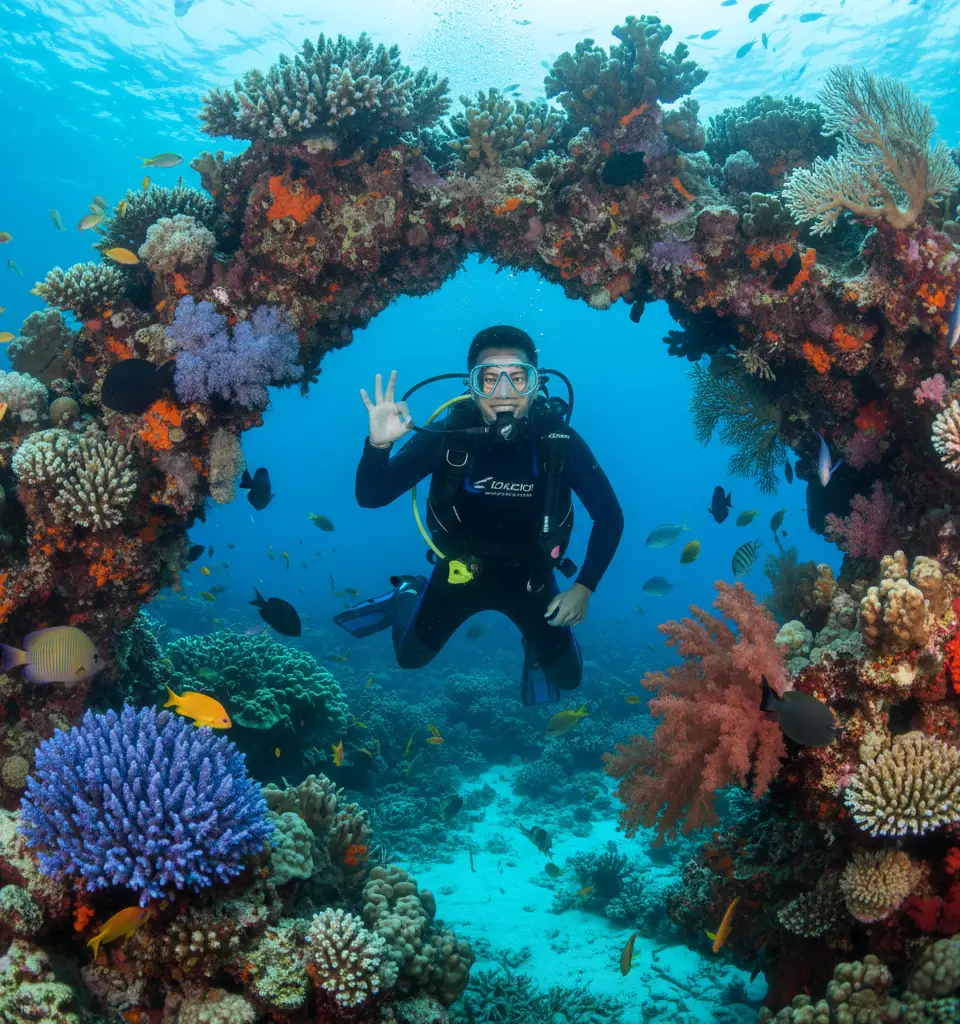
''' So you took the plunge—literally. You did a "try dive" or a Discover Scuba Dive here in the Andamans and now you're hooked. We see it all the time. That first breath underwater, seeing a whole new world of shimmering fish and colourful coral unfold… it changes you! The first thing everyone says when they surface is, "I want to do that again. For real."
If that sounds like you, then you're probably thinking about getting your Open Water certification. And honestly, there’s no better place to do it than right here on Havelock Island (Swaraj Dweep). The water is warm, the visibility is usually fantastic, and the marine life is just incredible. But with so many options, where do you even start? PADI? SSI? What's the difference? Don't worry, we've got you covered.
Why Get Certified on Havelock Island?
Let’s be real, you can get a scuba certification almost anywhere in the world. But learning in the Andamans is special. Havelock is the hub of our diving scene for a reason. The island is surrounded by dozens of dive sites, from gentle slopes perfect for beginners to more challenging deep sites for when you're more experienced. You’re not just learning in a pool; you’re learning in a world-class underwater environment.
Here, you’ll be doing your training dives surrounded by turtles, clownfish (yes, Nemo!), parrotfish, and vast fields of coral. The instructors are seasoned pros who have dived these waters for years. Plus, after a day of learning, you can relax on some of the most beautiful beaches in Asia. It doesn’t feel like a course; it feels like an adventure.
PADI vs. SSI: Does It Really Matter?
This is the big question for every aspiring diver. You'll see signs for both PADI (Professional Association of Diving Instructors) and SSI (Scuba Schools International) all over Havelock. Here’s the simple breakdown:
Both are globally recognized. A PADI certification is valid wherever you go, and so is an SSI certification. You can use an SSI card to dive with a PADI center and vice-versa. The safety standards are almost identical because they both adhere to the guidelines set by the World Recreational Scuba Training Council (WRSTC).
The main difference is in the teaching style and materials:
- PADI: Tends to be a bit more rigid and structured. You must complete skills in a specific order. Their materials, whether a physical book or e-learning, must be purchased by each student.
- SSI: Is a little more flexible. Instructors can change the order of skills (within reason) to suit a student's needs. Often, their digital learning materials are free, and you only pay for the certification itself.
Honestly, for a beginner Open Water Diver course, the difference is minimal. The quality of your instructor is far more important than the agency they teach for. A great instructor will make you a confident, safe diver, regardless of the logo on your certification card. My advice? Don't get too hung up on PADI vs. SSI. Instead, focus on finding a dive school that feels right for you.
How to Choose a Great Dive School
Since we can’t (and won’t) name specific businesses, we can give you the tools to find a good one. When you're walking around Havelock, here’s what you should look for and ask about:
- Check Their Vibe: Seriously. Walk in and talk to the staff. Do they seem passionate and friendly, or are they just trying to make a sale? A good dive center has a community feel. You should feel comfortable asking questions.
- Instructor-to-Student Ratio: Ask about their group sizes. For an Open Water course, a smaller group is always better. You’ll get more personal attention from the instructor. Four students per instructor is a great ratio.
- Look at the Equipment: You don’t need to be an expert to spot red flags. Does the equipment look clean and well-maintained? Or does it look old, worn, and sandy? A professional shop takes pride in its gear because your life depends on it.
- Safety First: Ask them about their emergency procedures. Where is the nearest medical facility? Do they have emergency oxygen on the boat? A good dive school will have clear, confident answers to these questions.
- Don't Just Go for the Cheapest: While budget is always a factor, your safety and quality of training are not areas to cut corners. The cheapest option might mean bigger groups, older equipment, or rushed training. Invest in a good experience.
FAQs
Q: How long does the Open Water Diver certification course take? A: Plan for about 3 to 4 full days. This usually includes some theory/e-learning, confined water sessions in shallow water to practice skills, and four open water dives in the sea.
Q: Do I need to be a strong swimmer to get certified? A: You don't need to be an Olympic athlete, but you do need basic water comfort. Most agencies require you to float or tread water for 10 minutes and swim 200 meters (or 300 meters with a mask, fins, and snorkel) without stopping. There is no time limit.
Q: How much should I expect to pay for a certification in Havelock? A: Prices are pretty competitive across the island, but they can fluctuate based on the season and the dive school. It's a significant investment, but it includes your instruction, equipment rental, boat trips, and certification fees. Think of it as a skill for life!
Q: Can I fly on an airplane right after I finish my course? A: No! This is a critical safety rule. You must wait at least 18-24 hours after your last dive before flying. Decompression sickness is a real risk. Plan your flight out of Port Blair accordingly—it's the perfect excuse for one last relaxed evening on the island. ''', tags=[
Local planning essentials
Plan the next part of your Andaman trip
Use these local guides to connect the islands, ferries, seasons and costs into one workable route.
- Scuba planningScuba diving costs and best sitesCompare beginner dives, certified dives and course prices across Havelock, Neil and Port Blair.Read the local guide
- Ferry logisticsPort Blair to Havelock ferry guideUnderstand sailing choices, reporting time, luggage rules and the buffer needed around flights.Read the local guide
- Season guideBest time to visit AndamanChoose travel months using sea conditions, ferry reliability, prices and scuba visibility.Read the local guide
- Havelock guideKalapathar Beach sunrise guidePlan the sunrise route, transport cost, tide-dependent photo stops and a sensible visit length.Read the local guide
- diving
- havelock
- andaman
- padi
- scuba
- ssi