Guide
A First-Timer's Guide to Scuba Diving in Andaman
Ever wondered what it's like to breathe underwater? Our local guide walks you through your first scuba dive in Andaman, from costs and safety to what you'll see.
So, you’re thinking about taking the plunge? We see you, standing on the edge of the boat, looking at that impossibly blue water, and wondering what’s down there. Let us tell you: it’s a whole different world. And here in the Andamans, it’s a world that’s surprisingly easy to visit, even if you’ve never strapped on a tank before.
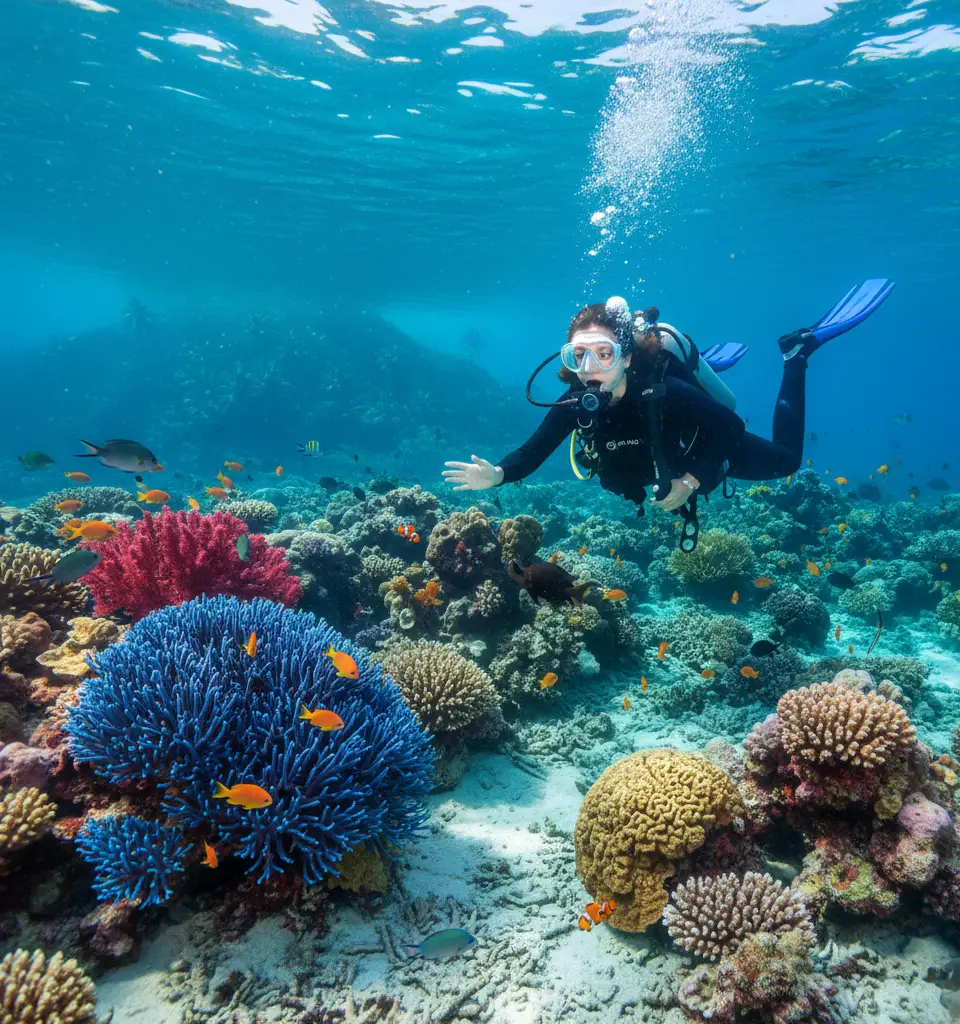
Forget what you’ve seen in movies. Your first scuba experience isn’t about fighting off sharks or exploring deep, dark wrecks. It’s about floating, weightless, in warm, clear water, surrounded by colours you’ve only seen on a screen. It’s about hearing nothing but your own bubbles and watching a curious parrotfish nibble on a coral right in front of you. And there’s no better place for that first magical breath underwater than right here.
Why Your First Dive Should Be Here
We might be biased, but the Andaman Islands, especially Havelock (Swaraj Dweep), are practically designed for beginner divers. The water is warm year-round, so you can leave the thick wetsuits behind. The underwater currents are generally mild and predictable, which means you won't be struggling to stay put. It makes for a calm and gentle introduction.
But the real star of the show is the visibility. On a good day, you can see 20-30 meters ahead of you. It’s like swimming in a giant, high-definition aquarium. The coral reefs are teeming with life, from tiny, vibrant damselfish to graceful sea turtles and the occasional, shy ray gliding along the sandy bottom. Many of the best beginner dive sites are just a short boat ride from the main jetty on Havelock, making them super accessible.
You don’t need any experience at all. The most popular option for first-timers is called a "Try Dive" or "Discover Scuba Dive" (DSD). It’s not a certification course; it’s a guided, one-time experience designed to let you see if you like it. Spoiler alert: you probably will.
What to Expect on Your "Try Dive"
The whole process is designed to be safe and build your confidence. It starts on land, or on the boat, with a thorough briefing from a certified instructor. They’ll explain the basic science of how it all works, how to use the equipment, and the simple hand signals you’ll use to communicate underwater. Pay attention, but don’t stress—it’s all very straightforward.
Next, you’ll get into the water in a shallow, calm area where you can stand up. With your instructor right beside you, you’ll practice breathing through the regulator and clearing your mask. My first time, I snorted water up my nose and came up sputtering, and that's totally fine! The instructors have seen it all. They won't take you deeper until you’re comfortable.
Then comes the best part. Your instructor will be with you the entire time, managing your buoyancy and air supply, so all you have to do is relax, breathe, and look around. You'll slowly descend along a rope to the reef, usually no deeper than 12 meters. The feeling of weightlessness is incredible. You're flying, but underwater. For the next 30-45 minutes, you’ll be a guest in a busy, beautiful city of coral and fish.
How Much Does It Really Cost?
So, what’s the damage to your wallet? Prices for a Discover Scuba Dive in Andaman can vary, but you can generally expect to pay somewhere between ₹3,500 and ₹6,000 per person.
This price almost always includes:
- All your equipment rental (mask, fins, tank, BCD vest, regulator)
- A certified instructor who is with you one-on-one
- A pre-dive briefing and skills practice
- A dive of about 30-45 minutes
- Boat transfers to the dive site
What might not be included are photos and videos. Most dive shops offer this as an add-on, and it can be a great souvenir. Just be sure to ask about the cost upfront so there are no surprises. When you're choosing a dive centre, don’t just go for the cheapest option. Look for a reputable, professional outfit with good reviews and certified instructors (like PADI or SSI). Your safety is the most important thing.
FAQs
Q: Do I need to be a strong swimmer to scuba dive? A: Not for a Try Dive! You do need to be comfortable in the water, but since you'll have a flotation device (the BCD) and an instructor with you, swimming skills aren't a prerequisite. If you decide to get certified later, you will need to pass a basic swim test.
Q: Is scuba diving in Andaman safe for beginners? A: Yes, it’s very safe when done correctly. The islands have a well-established dive community with professional operators who follow strict international safety standards. You are always with a certified professional whose only job is to keep you safe.
Q: What is the best time of year for diving? A: The best and most popular season is from October to May. During these months, the seas are at their calmest and the underwater visibility is at its peak. While diving is possible during the monsoon (June to September), conditions can be less predictable.
Q: What if I love it? Can I get certified in Andaman? A: Absolutely! Havelock is one of the best places in India to get your Open Water Diver certification. The courses usually take 3-4 days and include everything you need to become a certified diver, allowing you to dive anywhere in the world.
Local planning essentials
Plan the next part of your Andaman trip
Use these local guides to connect the islands, ferries, seasons and costs into one workable route.
- Scuba planningScuba diving costs and best sitesCompare beginner dives, certified dives and course prices across Havelock, Neil and Port Blair.Read the local guide
- Ferry logisticsPort Blair to Havelock ferry guideUnderstand sailing choices, reporting time, luggage rules and the buffer needed around flights.Read the local guide
- Havelock guideKalapathar Beach sunrise guidePlan the sunrise route, transport cost, tide-dependent photo stops and a sensible visit length.Read the local guide
- Island guideHavelock (Swaraj Dweep) island guideHow many nights Havelock needs, which beaches suit which day, and how to move between the jetty, Radhanagar and Kalapathar.Read the local guide
- andaman
- scuba diving
- havelock
- beginner guide
- costs