Guide
Monsoon vs. Winter in Andaman: When Should You *Really* Visit?
Can't decide between a sunny winter holiday and a quiet monsoon getaway in the Andamans? We're locals, and here's our honest take to help you choose.
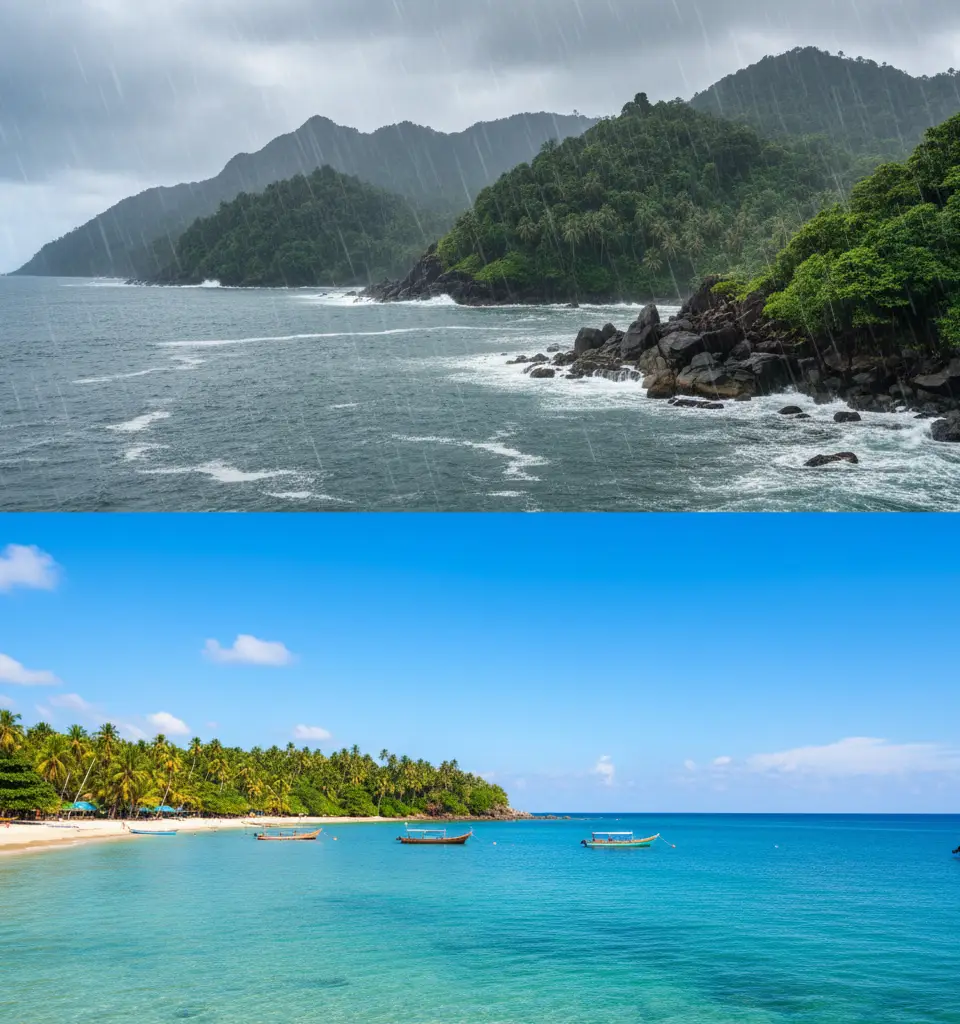
"So, when is the best time to visit?" It's the question we get asked more than any other. Most websites will give you a straight answer: winter. And they're not wrong, exactly. But it's not the full story. We live here, and we know that the Andamans wear two very different, very beautiful hats: the sunny, postcard-perfect winter hat, and the dramatic, moody monsoon one.
Choosing between them isn't about picking the "best" season, but the best season for you. Are you dreaming of endless blue skies and non-stop water sports? Or are you looking for a quiet, budget-friendly escape where you can watch the rain from a cozy balcony? Let's break it down, local style.
The Case for Winter: Sunshine and Smooth Seas
Winter here, which runs from roughly October to March, is what you probably see in all the brochures. The sky is a brilliant, cloudless blue, the sea is calm and impossibly turquoise, and the humidity takes a pleasant dip. It's the peak season for a reason.
This is the time for action. If you're coming for scuba diving or snorkeling, the water clarity is at its absolute best. You can see for meters and meters, making spots around Havelock (Swaraj Dweep) and Neil (Shaheed Dweep) truly spectacular. All the dive shops are running at full steam, and the ferries between Port Blair and the other islands are reliable and frequent. This is prime time for island hopping without a worry.
Want to spend your days lounging on Radhanagar Beach without a cloud in sight? Winter is your ticket. All the water sports, from jet skis to parasailing, are fully operational. It's also the most social season, with plenty of travelers and a lively, energetic atmosphere everywhere.
The downside? It's more crowded and more expensive. You'll need to book flights and hotels well in advance, especially around Christmas and New Year's. But if your vision of an Andaman trip involves sunshine, parties, and maximum adventure, you can't beat the winter months.
The Case for Monsoon: Green Islands and Great Deals
Now, let's talk about the underdog: the monsoon season, typically from June to September. Many people are told to avoid it, but we locals have a soft spot for the islands during this time. The Andamans transform into a lush, green paradise. The rice paddies are full, the forests are bursting with life, and the clouds put on a dramatic daily show.
Frankly, it doesn't rain all day, every day. You'll get spells of intense rain, but often followed by hours of beautiful, soft sunshine. It’s a different kind of beauty—moody, romantic, and incredibly peaceful. My favourite thing to do is find a nice covered sit-out at a cafe, order a chai, and just watch the rain fall over the sea.
The biggest advantage of a monsoon trip is the lack of crowds. The beaches are quiet. You can often have a stretch of sand all to yourself. It’s the perfect time for travelers looking for solitude and a slower pace. Photographers love this season for the dramatic skies and vibrant greens.
And let's not forget the prices. Flights and accommodation are significantly cheaper. You can get some amazing deals on beautiful resorts that would be fully booked in winter. While some water sports might be limited and ferry schedules can sometimes be disrupted by rough seas, the main routes usually run. You just need to be a little more flexible with your plans.
So, Which Is It? Winter or Monsoon?
Think about your priorities.
Choose Winter if:
- You are a first-time visitor and want the classic "Andaman experience."
- Scuba diving with maximum visibility is your top priority.
- You want guaranteed sunny weather for beach-hopping and water sports.
- You don't mind crowds and have a slightly higher budget.
Choose Monsoon if:
- You are on a tight budget.
- You hate crowds and are seeking peace and quiet.
- You love lush landscapes and dramatic, cloudy skies.
- You’re a flexible traveler who doesn’t mind the occasional downpour or a potential ferry delay.
Ultimately, there is no wrong answer. Winter gives you the Andamans in all their sunny glory. Monsoon shows you their soulful, green heart. Both are beautiful; they’re just different holidays altogether.
FAQs
Q: Is it safe to travel to Andaman during monsoon? A: Yes, it's generally safe. The main tourist hubs like Port Blair, Havelock, and Neil are well-equipped. The primary concern is potential ferry cancellations due to rough seas, so it's wise to have a couple of buffer days in your itinerary.
Q: Are water sports open during the monsoon? A: It varies. Activities like jet skiing and snorkeling might be available during calm spells. However, scuba diving is often limited as visibility is lower, and some dive centers may close. Sea walking and parasailing are usually suspended.
Q: Is Havelock or Neil accessible in the monsoon? A: Yes, both islands are accessible. Government and private ferries operate throughout the year. However, schedules can be less frequent and are subject to weather conditions. It's rare, but you could get stuck for a day if the sea is too choppy.
Q: Which season is more expensive for a trip to the Andamans? A: Winter (October to March) is significantly more expensive. This is the peak tourist season, so flights, hotels, and even some activities cost more. Monsoon (June to September) is the low season and offers the best deals for budget travelers.
Local planning essentials
Plan the next part of your Andaman trip
Use these local guides to connect the islands, ferries, seasons and costs into one workable route.
- Scuba planningScuba diving costs and best sitesCompare beginner dives, certified dives and course prices across Havelock, Neil and Port Blair.Read the local guide
- Ferry logisticsPort Blair to Havelock ferry guideUnderstand sailing choices, reporting time, luggage rules and the buffer needed around flights.Read the local guide
- Season guideBest time to visit AndamanChoose travel months using sea conditions, ferry reliability, prices and scuba visibility.Read the local guide
- Trip durationFive-day Andaman itinerary and costsSee a practical Port Blair and Havelock route with hotel tiers, ferries and per-person estimates.Read the local guide
- andaman
- monsoon
- winter
- andaman weather
- travel guide